
BPC-157, GHK-Cu & the ‘Research Peptide’ Trend: What the Science (and FDA) Actually Say
BPC-157, GHK-Cu & the ‘Research Peptide’ Trend: What the Science (and FDA) Actually Say
I’m a board-certified family medicine physician in Chattanooga, Tennessee, and founder of Summit Metabolic Health. I read every patient chart personally. This article reports on a topic patients keep asking about — it is education, not an endorsement.
Scroll through any peptide-focused corner of the internet right now and you’ll find the same two names coming up again and again: BPC-157 and GHK-Cu. Threads asking someone to ‘explain it like I’m five’ sit next to questions about whether GHK-Cu is safe to have around a newborn. The interest is real. So is the confusion. Here’s a clear-eyed look at what these compounds are, what the FDA actually says about them, and why the gap between online enthusiasm and regulatory reality matters.
What Is BPC-157?
BPC-157 is a synthetic peptide derived from a protein found in gastric juice. Animal studies have explored its potential role in tissue repair and gut healing, which is part of why it’s popular in fitness and biohacking communities. But animal data is not the same as evidence of safety or effectiveness in humans, and no large-scale human clinical trials have established either.
What Is GHK-Cu?
GHK-Cu is a naturally occurring copper-binding peptide that’s been studied for decades, mostly in the context of wound healing and skin appearance. It’s a common ingredient in topical cosmetic products, where it’s regulated very differently than an injectable or ingested compound would be. The ‘is it safe around a newborn’ question circulating online usually stems from confusion between a cosmetic-grade topical ingredient and unregulated injectable versions sold as ‘research chemicals’ — these are not interchangeable.
The FDA Status That Actually Matters
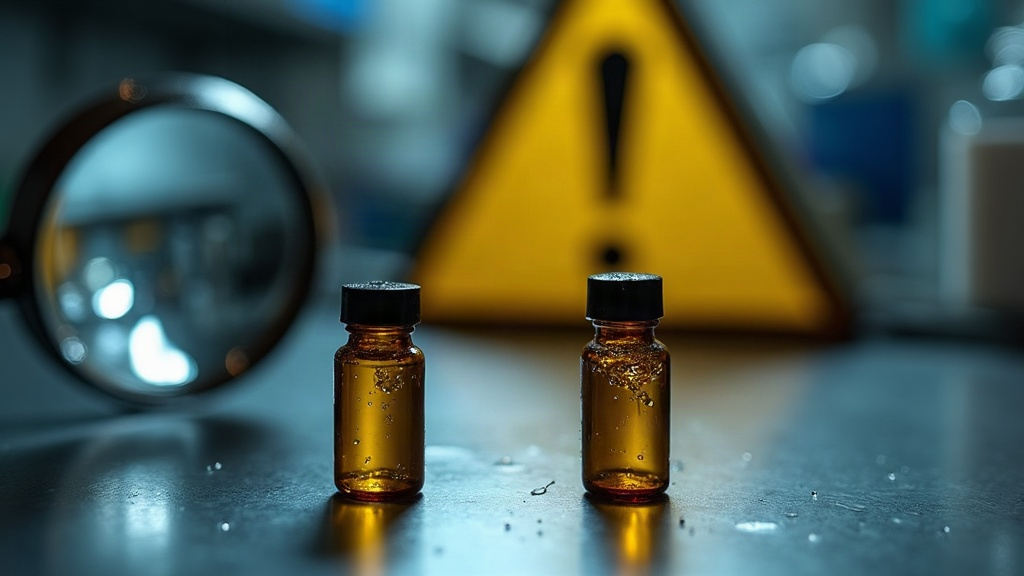
Neither BPC-157 nor GHK-Cu is FDA-approved as a prescription therapeutic for any human use. In 2023, the FDA placed BPC-157 on its list of substances that present significant safety risks and are not appropriate for compounding, which effectively limits legitimate pharmacy access. Products sold online labeled ‘for research purposes only’ are, by definition, not manufactured, tested, or regulated for human consumption — regardless of how they’re marketed or discussed in forums.
Why the Risk Is Bigger Than It Looks
Gray-market peptides typically come from unregulated overseas suppliers with no FDA oversight of purity, dosing accuracy, or sterility. Contamination, incorrect concentration, and unknown impurities are documented concerns in independent lab testing of these products. There’s also no formal pharmacovigilance — no system tracking adverse events — so the actual risk profile in humans remains largely unknown. That uncertainty is exactly why questions like ‘is this safe around a newborn’ don’t have a confident answer: the safety data simply doesn’t exist at the standard we’d expect for anything used around an infant or, frankly, anyone.
Where This Differs From FDA-Approved GLP-1 Medications
It’s worth drawing a clear line here. Semaglutide and tirzepatide — the GLP-1 medications used for weight management and metabolic health — went through FDA clinical trial review, have established dosing protocols, and are manufactured under regulated pharmaceutical standards. That’s a fundamentally different category from a compound purchased online with a ‘not for human use’ disclaimer. At Summit, our physician-led approach centers on these FDA-approved options, prescribed and monitored individually — not on trending compounds without that regulatory foundation.
The Bottom Line
Curiosity about peptide science isn’t unreasonable — the research questions themselves are legitimate and evolving. But curiosity is different from confidence, and right now the confidence needed to use BPC-157 or injectable GHK-Cu safely in humans simply isn’t backed by regulatory approval or robust clinical data.
Our physician-led team can walk you through FDA-approved options and what the research really supports. Talk to a physician →